INSIGHTS
Europe Signs Historic Pact to Keep AI's Lights On
Eurelectric, ENTSO-E, and EU DSO Entity sign the Twin Transition Commitments to safely absorb AI data center load across European grids
8 Jun 2026
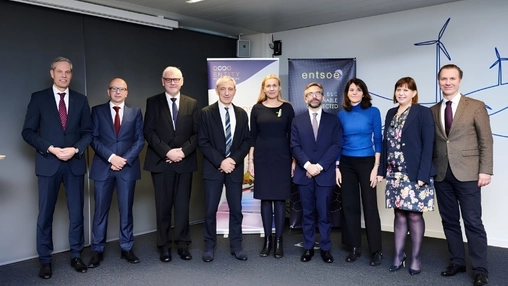
One in three units of new European electricity demand by 2030 will be drawn by computers. That single projection, aired at the Power Summit in Helsinki, explains why Eurelectric, ENTSO-E, and the EU DSO Entity felt compelled to put something in writing.
What they signed, called the Twin Transition Commitments, is less a solution than an admission. Grid operators have spent decades planning for slow, predictable load growth. High-density AI data centres are neither slow nor predictable. A facility that consumes dozens of megawatts can appear, legally speaking, almost overnight. Grids cannot.
Geography sharpens the tension. Tech companies choose sites for land prices and fibre access, not proximity to spare transmission capacity. Concentrated digital demand presses against dispersed, ageing infrastructure. Under the new framework, operators across borders must share planning data and align expansion timelines before approvals are granted, not after complaints are filed.
Funding remains the harder problem. Clean energy network reinforcement costs far more than current allocations cover, and national grid budgets were never designed with server farms in mind. Milestones in the pact are intended to stop communities from absorbing grid stress that regulators failed to anticipate, though the financing gap is left unresolved.
Simulation tools, known as digital twins, feature prominently in the agreement. By modelling stress on high-voltage lines before a single cable is laid, operators can test worst-case scenarios virtually and potentially avoid costly physical failures. Whether utilities deploy them consistently across twenty-seven member states is a separate question.
Structurally, the deeper difficulty persists. Renewable generation is intermittent. Data centres are not. Balancing a grid that must reconcile both, at scale, without central coordination, will test the limits of voluntary frameworks. Commitments signed in Helsinki are a start. Whether they hold when capacity is scarce and commercial pressure mounts is what will matter.
Related News


SUBSCRIBE FOR UPDATES
By submitting, you agree to receive email communications from the event organizers, including upcoming promotions and discounted tickets, news, and access to related events.