INNOVATION
Can AI Run Europe's Power Grids? The EU Thinks So
The European Commission launched AI.grids on 3 June 2026, uniting 48 partners to build sovereign AI models for EU power grids
12 Jun 2026
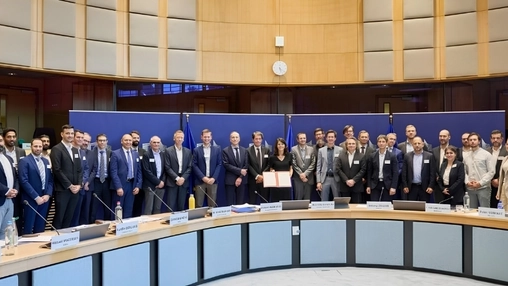
The European Commission launched AI.grids on 3 June 2026, a programme designed to produce AI models for managing power grids across the bloc. Forty-eight partners joined the initiative at launch, drawn from grid operations, research, and industry.
ENTSO-E and the EU DSO Entity, the bodies that oversee transmission and distribution networks respectively, are among the participants. Their involvement ties the project's technical development to the operational realities of running high-voltage infrastructure at continental scale, rather than to abstract research objectives.
Private sector commitment arrived early. Fourteen European industry associations signed a Declaration of Intent, and six companies issued formal support declarations pledging early deployment. That level of upfront commitment shortens the gap between research output and practical use.
Beyond efficiency, the programme addresses a more structural problem. Grid operators are contending with rising electricity demand from data centres and electric vehicles, alongside the challenge of absorbing variable renewable generation into networks not always built for it. AI tools capable of adjusting grid flows in near real time address a problem that conventional automated systems handle poorly.
Sovereignty shapes the programme's design. By keeping AI model development within the EU, the initiative reduces exposure to non-European technology providers and ensures that critical energy infrastructure is subject to European data rules and regulatory oversight. That consideration has grown more pressing as grid control systems become increasingly digital.
With institutional backing, a broad partner network, and declared implementers already in place, the programme enters a phase of model development under closer public scrutiny than most research initiatives of comparable scale.
Related News


SUBSCRIBE FOR UPDATES
By submitting, you agree to receive email communications from the event organizers, including upcoming promotions and discounted tickets, news, and access to related events.