INNOVATION
Power Without a Pulse? Not Anymore
SMA, Sungrow, and Envision debuted grid-forming inverters as Germany rolled out a new inertia support market
1 Jul 2026
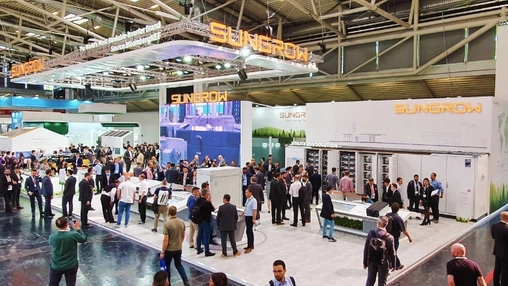
Munich became ground zero for a quiet but consequential shift in European energy this week. At Intersolar Europe 2026, held June 23 to 25, three manufacturers rolled out competing grid-forming inverter platforms, each betting that the technology once considered niche is about to become essential. SMA Solar debuted its Medium Voltage Power Station with integrated grid-forming battery capability. Sungrow showed off its award-winning PowerTitan 3.0, while Envision unveiled its Gen 8 Long-Duration Energy Storage System.
The timing wasn't an accident. Germany activated a new power system inertia support market this year, dangling attractive remuneration in front of large-scale battery and renewable operators willing to add grid-forming capability. That single policy shift is now rippling outward, pushing standardization efforts and regulatory alignment across EU member states. Manufacturers finally have a business case to scale.
Dr. Sönke Rogalla, head of power electronics and grid integration at Fraunhofer ISE, explained why the stakes are rising. Grid-forming inverters are key to keeping the system stable once supply comes entirely from renewables, he said. As conventional plants retire one by one, grids lose their natural buffer against frequency swings. Without synthetic inertia to replace it, that buffer simply disappears.
Industrial buyers and grid operators feel the difference immediately. They can now procure storage assets that actively stabilize frequency instead of merely reacting to it after the fact. Three hardware launches landing alongside Germany's new incentive framework suggest something bigger than a trade show trend: grid-forming capability is sliding from premium add-on toward baseline requirement in European procurement.
Utilities and developers working across multiple EU markets stand to gain the most from any harmonized standard, since shared rules would cut certification costs and shrink deployment timelines. Consumers benefit too, if more quietly. Regulatory momentum is building, three major manufacturers are now competing head-to-head on stability features, and Europe's grid is edging toward the resilience its renewable ambitions have long demanded.
Related News


topics on the agenda
SMART GRIDS – STRATEGY AND CHALLENGES FOR DSOs
Day 1: MONDAY, 20 JULY, 2026
09:00 - 09:25
HOW TO TRANSFORM DISTRIBUTION NETWORKS INTO SMART GRIDS
Day 1: MONDAY, 20 JULY, 2026
09:30 - 09:55
SMART GRIDS: IS THE LAW READY?
Day 1: MONDAY, 20 JULY, 2026
10:00 - 10:25
SUBSCRIBE FOR UPDATES
By submitting, you agree to receive email communications from the event organizers, including upcoming promotions and discounted tickets, news, and access to related events.