RESEARCH
Can Sodium Finally Beat Lithium at Its Own Game?
German researchers have eliminated fire risk in large format sodium ion batteries, potentially reshaping Europe's energy storage future.
19 Jun 2026
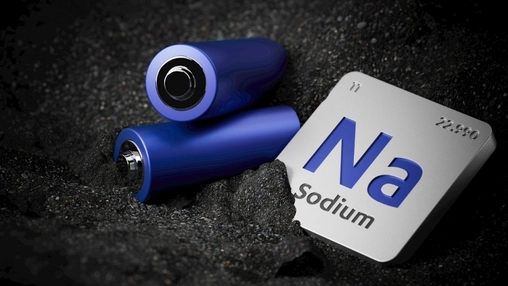
Batteries are supposed to store energy, not release it all at once. For sodium-ion cells, that distinction has proved elusive. Thermal runaway, the uncontrolled heat cascade that turns a battery into a fire hazard, has kept the technology confined to small formats and laboratory optimism. A result published by researchers at Fraunhofer FFB in Münster suggests that constraint may finally be lifting.
The team, working with partner institutions, developed what they call a Polymerizable Non-flammable Electrolyte, or PNE. Professor Hu Yongsheng describes it as yielding "the world's first zero thermal runaway result" at ampere-hour scale, meaning cells large enough to matter for grid storage. Previous demonstrations at smaller scales had offered encouragement without conviction. Grid operators need large-format cells that perform under sustained load without catastrophic failure, and no prior result at that size had cleared the bar.
Clearing it now matters beyond the laboratory. Thermal runaway has not merely been a technical inconvenience. Insurance underwriters have priced the risk conservatively, regulators have hesitated, and investors have stayed cautious. A credible safety profile changes each of those calculations. Companies already positioned in sodium-ion, among them Tiamat Energy and Bihar Batteries, stand to benefit as regulatory approvals in European markets become easier to obtain.
The timing sharpens the significance. Europe is searching, with some urgency, for energy storage options that do not depend on Chinese lithium supply chains. Sodium is abundant, cheap, and geographically diffuse. A safer sodium-ion cell does not solve Europe's storage problem outright, but it removes the most visible reason not to pursue it seriously.
For developers of energy infrastructure, the practical implications are considerable. Safer cells reduce insurance costs, ease permitting, and open up densely populated areas where lithium-based storage faces regulatory resistance. Consumers may eventually benefit from a more resilient and competitively priced grid. The distance from laboratory milestone to deployed infrastructure remains real, but after this result, it looks shorter than before.
Related News


topics on the agenda
SMART GRIDS – STRATEGY AND CHALLENGES FOR DSOs
DAY 1: undefined
09:00 - 09:25
HOW TO TRANSFORM DISTRIBUTION NETWORKS INTO SMART GRIDS
DAY 1: undefined
09:30 - 09:55
SMART GRIDS: IS THE LAW READY?
DAY 1: undefined
10:00 - 10:25
SUBSCRIBE FOR UPDATES
By submitting, you agree to receive email communications from the event organizers, including upcoming promotions and discounted tickets, news, and access to related events.